
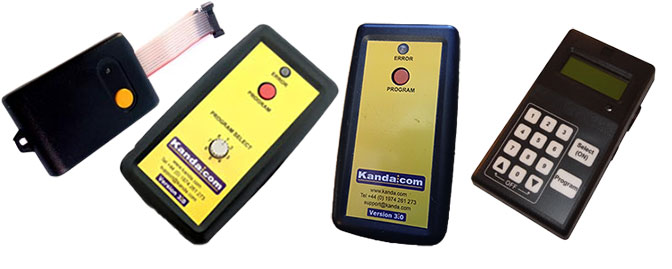
Kanda produces several tiers of standalone AVR programmers designed to bypass the need for a PC or complex development environment (like Microchip Studio) during deployment. They are heavily utilised for factory production lines, field service updates, and distribution to end-users.
Continue reading “Kanda AVR Standalone Programmer Choices” »Tag Archives: avr handheld
ELF Files Explained Part 3
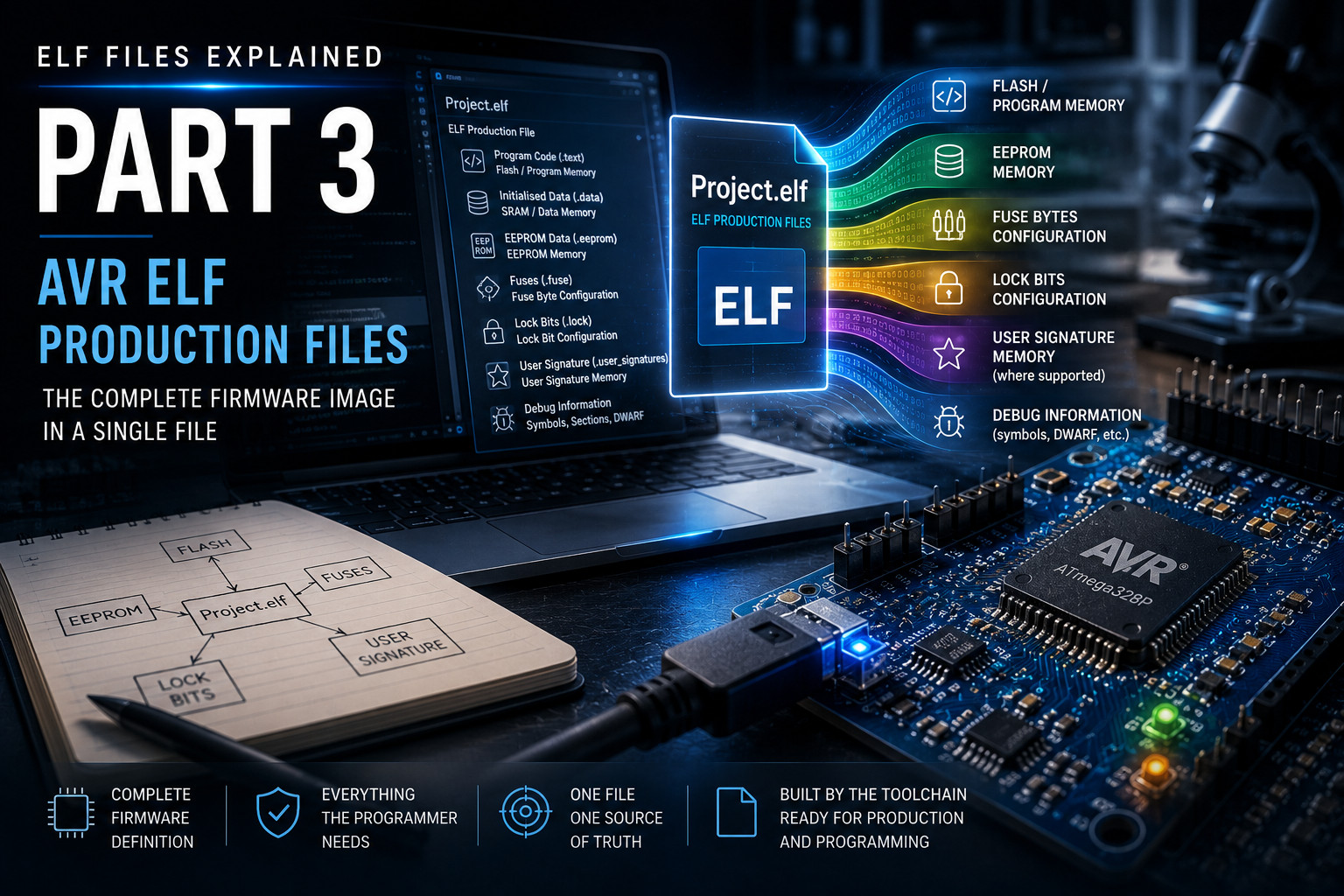
ELF Files Explained – Part 3: AVR ELF Production Files – The Complete Firmware Image
Part 3 of the "ELF Files Explained" Series
In Part 1, we explored the history of executable file formats and saw how ELF became the industry standard for modern operating systems and GCC-based development toolchains. In Part 2, we looked inside the format itself, examining the headers, sections, symbol tables and debugging information that let compilers, linkers and debuggers work together using a common file format.
Understanding the internal structure of an ELF file is valuable, but it naturally leads to another question: what does all of this mean for an embedded firmware project?
In this article, we turn to AVR development and examine the AVR ELF Production File generated by Atmel Studio and the AVR-GCC toolchain. We will see how it becomes the definitive output of the build process, bringing together executable code, EEPROM data, fuse settings, lock bits, User Signature memory and debugging information into a single engineering artefact that represents the complete firmware project.
ELF Files Explained Part 2
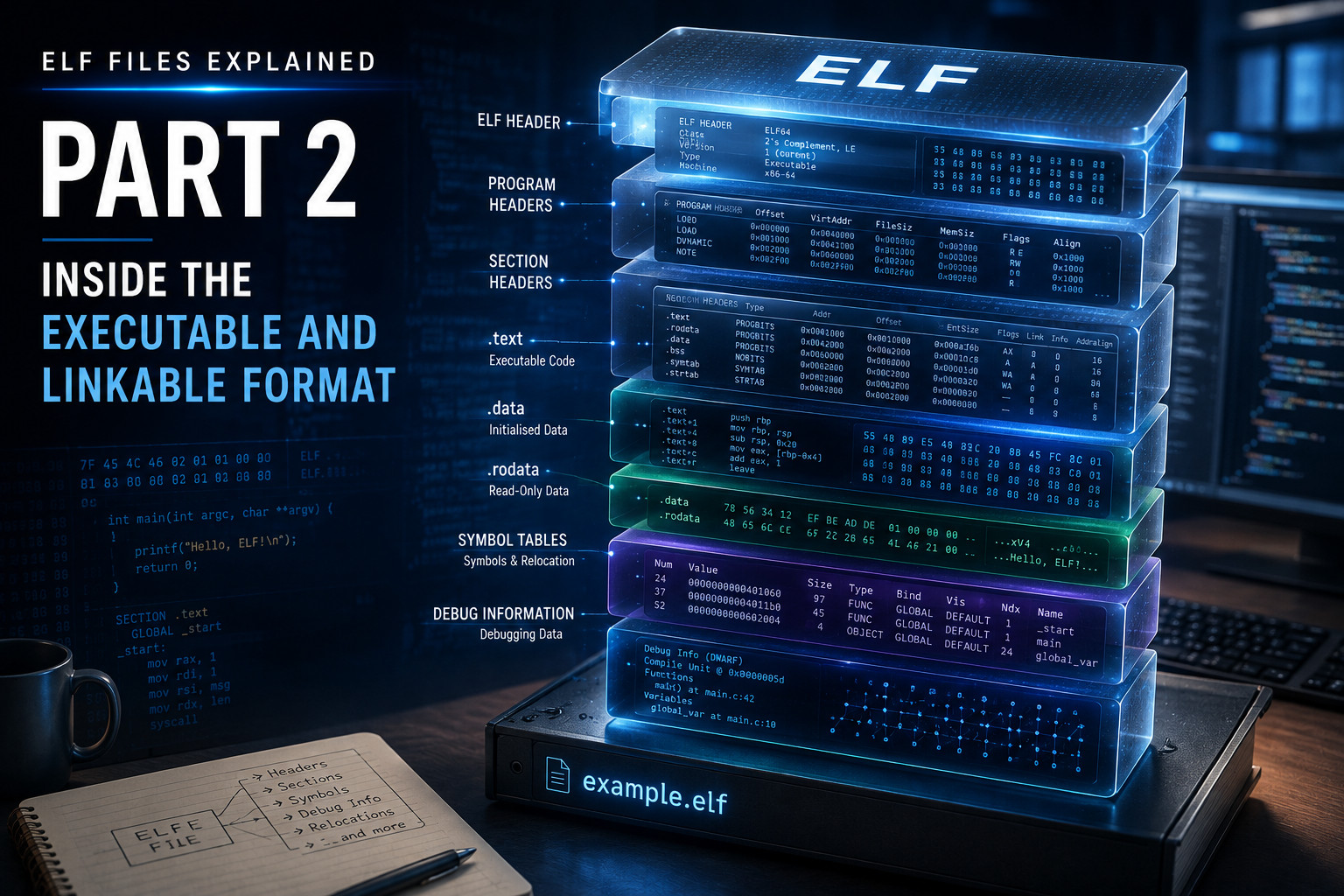
ELF Files Explained – Part 2: Inside the ELF Format – Headers, Sections, Symbols and Debug Information
Part 2 of the "ELF Files Explained" Series
In Part 1, we explored the history of executable file formats and the evolution from early UNIX formats such as a.out and COFF to the Executable and Linkable Format. We also saw how ELF became the standard executable format for Linux and a fundamental component of modern embedded development toolchains.
In this article, we move beyond that historical perspective and begin examining the internal structure of an ELF file. Rather than treating it as an opaque binary, we will break it down into its major components and see how linkers, loaders and debuggers each interpret the information it contains.
CAN Bus Explained Part 2
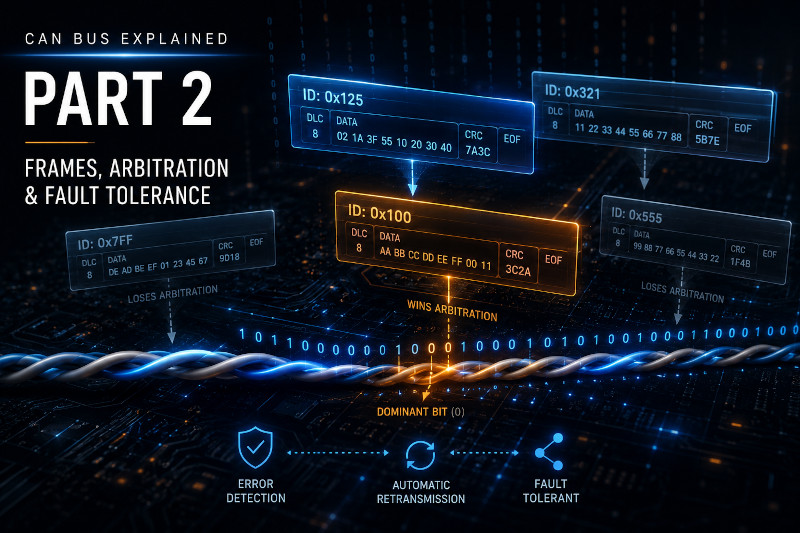
CAN BUS EXPLAINED
Part 2: Frames, Arbitration and Fault Tolerance
UPDI Explained: The Complete Guide to Programming and Debugging Modern AVR Microcontrollers
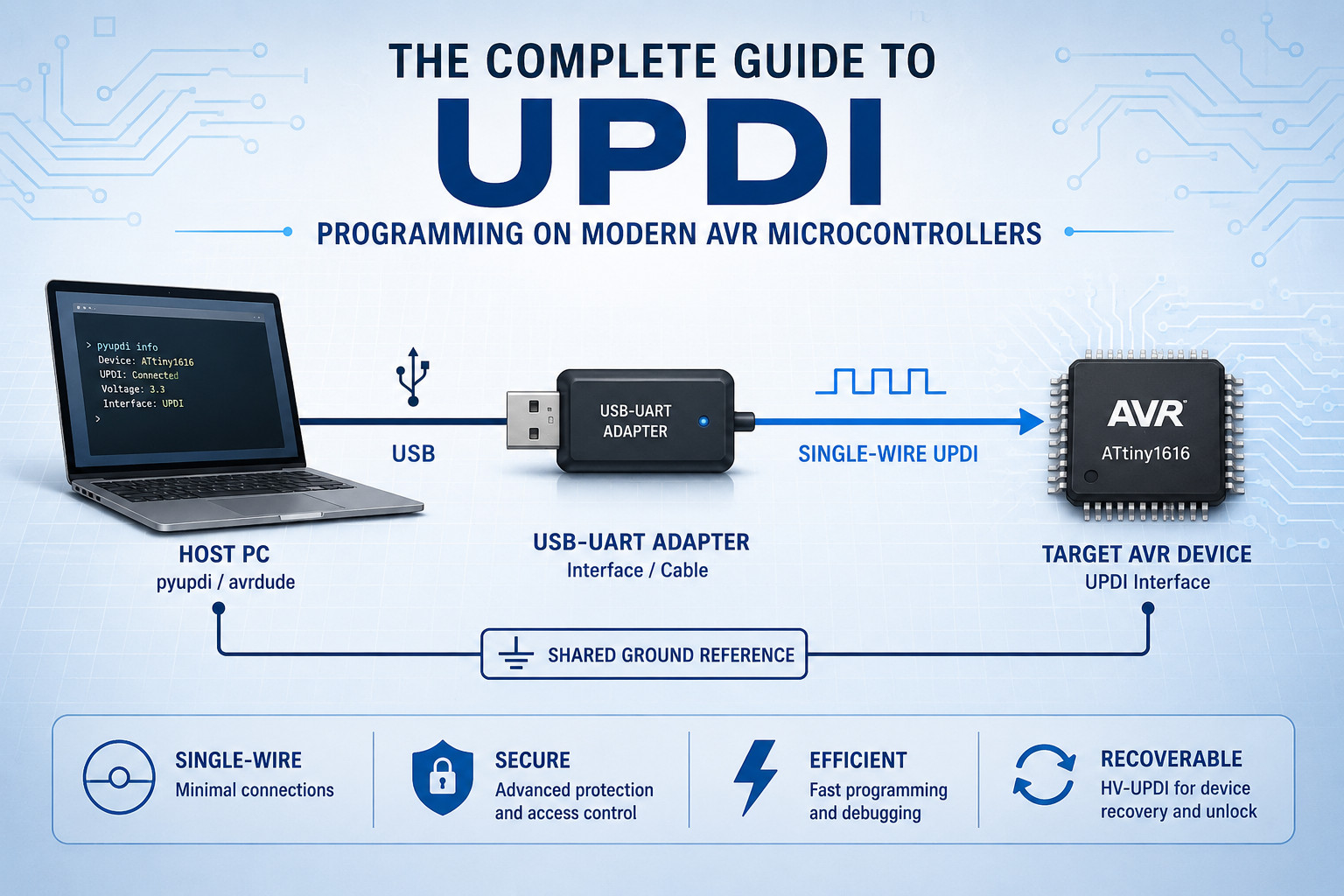
UPDI Explained: The Complete Guide to Programming and Debugging Modern AVR Microcontrollers
A comprehensive guide to the Unified Program and Debug Interface (UPDI), including architecture, signalling, security, memory programming, debugging, recovery techniques and programmers.
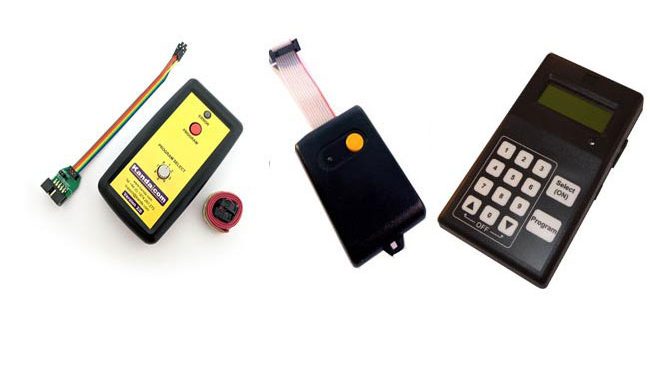
AVR Standalone Programmer
A standalone AVR microcontroller programmer is a device that can program microcontrollers without needing to be connected to a computer during the programming process. These devices are useful for production environments, field updates, or any situation where a laptop or PC is not convenient.
Continue reading “AVR Standalone Programmer” »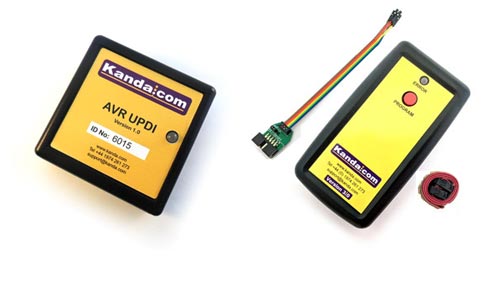
How to Choose an AVR Programmer
Choosing the correct AVR programmer depends on the requirements of your project, budget and your experience level. There are a number of factors to consider when making your decision.
Continue reading “How to Choose an AVR Programmer” »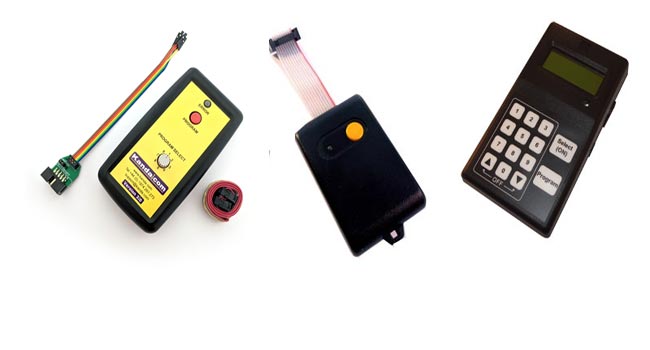
What is a Standalone Programmer?
A standalone microcontroller programmer is a device that can be used to program microcontrollers without the need for a computer. This makes them ideal for use in portable applications, or for programming microcontrollers that are not easily accessible by a computer. They also simplify production tasks as the operator can be relatively unskilled.
Continue reading “What is a Standalone Programmer?” »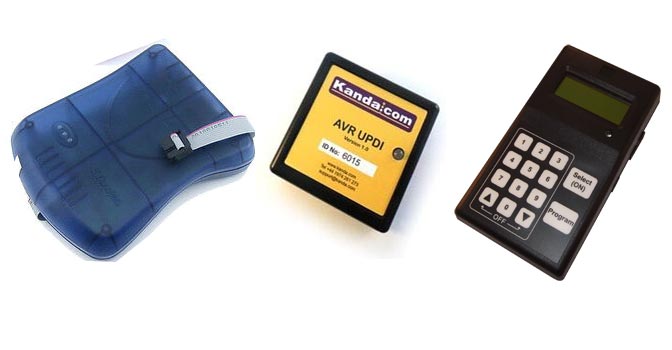
Atmel AVR TPI Programmer Selection
Atmel, now Microchip, have been moving away from AVR ISP programming method for some time. All the latest AVR microcontrollers now use UPDI programming interface but some ATtiny chips used TPI interface, which is discussed here.
Continue reading “Atmel AVR TPI Programmer Selection” »All You Need to Know About AVR ISP, UPDI, JTAG, PDI and TPI.
AVR microcontrollers were first introduced almost 30 years ago and since then there have been a few changes, especially since Microchip absorbed Atmel. The AVR was one of the first microcontrollers to have onboard flash memory that could be electrically erased and reprogrammed and this enabled the introduction of In System Programming or ISP.
Read more: All You Need to Know About AVR ISP, UPDI, JTAG, PDI and TPI. Continue reading “All You Need to Know About AVR ISP, UPDI, JTAG, PDI and TPI.” »