
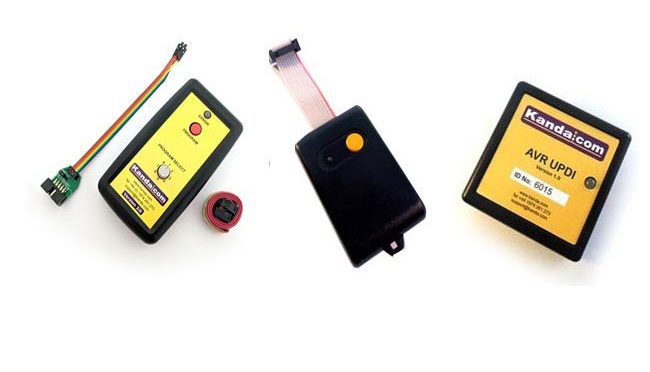
When AVR microcontrollers were first introduced in 1995, In System Programming was simple, with one programming method (Serial Programming Interface or SPI) and a recommended 5 x 2 10-pin target interface. For 10-15 years, this stayed the same except for the addition of JTAG programming on some devices and a move towards a 3 x 2 6-pin target header. In the last few years, new interfaces have sprouted like weeds, including TPI, PDI and UPDI. What do this all mean and how does it affect you?
Continue reading “AVR Programming – ISP, JTAG, TPI, PDI and UPDI” »Category Archives: AVR Microcontrollers
Atmel Studio Missing External Tools Menu
The latest versions of Atmel Studio 7 seem to omit External Tools… from the Tools menu. This command is necessary to add your own programmer so it can be launched from Studio. If it is missing, how is it added?
Continue reading “Atmel Studio Missing External Tools Menu” »
Atmel Studio ELF production Files for AVR
Atmel have added a new feature to Atmel Studio from 6.2 on-wards including 7. You can now create a single file that contains all the data needed to program an AVR or ATxmega microcontroller. This includes flash, EEPROM, fuses, lock bits and ATxmega User Row. This is called an ELF production file and Kanda AVR Handheld Programmers now support this format.
Continue reading “Atmel Studio ELF production Files for AVR” »
Can I Get a Genuine Atmel AVRISP MKII?
This is a question we are often asked. I want a genuine Atmel AVR ISP MKII (ATAVRISP2) not a Chinese clone, can you supply it? Unfortunately the answer is no as Atmel have stopped manufacturing their ATAVRISP2 programmer.
Which is the Best AVR ISP?
ISP or In System Programming is the best way to program AVR microcontrollers as it allows them to be programmed in circuit. This is easier for development, production and most importantly, for updating the firmware later in the field. The tool used for this is an AVR ISP.
What is Arduino?
Arduino is officially an open source electronic prototyping system, which is sold with the slogan “So easy, my granny can use it”. It is not quite as simple as that but it is pretty easy to buy a successful project and implement it quickly. So if your idea has already been done, Arduino makes it straightforward to carry it out.
How to Program Arduino with AVR ISP Programmer
If you have been using Arduino to develop your code but want to move on to develop your own AVR based circuit or want to program your Arduino board with an external programmer to give more code space, you will need to understand how to use an AVR ISP or In System Programmer. This post covers the information you need
Continue reading “How to Program Arduino with AVR ISP Programmer” »
Where to find Arduino Hex files or Output Binaries
You can use a normal AVR ISP programmer to upload Arduino sketches to an Arduino board or to an AVR microcontroller in your own circuit, such as ATmega328P, ATmega8 or ATmega2561, but first you need to know how to find the hex files that the programmer needs. The Arduino IDE makes this as hard as possible for some reason. This post shows you how to find them and also how to make Arduino put them in an easier place to find in future.
Continue reading “Where to find Arduino Hex files or Output Binaries” »
AVRDude with Kanda AVRISP
AVRDude is free open source software for programming AVR devices. It is command line based but can be run from a batch or make file. It is the main programming utility used by Arduino software when the target board does not have a bootloader.
STK200, STK500, STK600 and Arduino Compared
Kanda have been making the STK200 starter kit for 15 years and it is still proving to be very popular. It was originally designed for Atmel and was the first low cost microcontroller training kit on the market and helped launch the AVR as a popular microcontroller.
Atmel have since moved on to STK500 and STK600 as the AVR portfolio has expanded but the original kit has many advantages, especially for beginners. Arduino has also entered the market but this serves a different purpose and won’t actually teach you much about microcontrollers.
Continue reading “STK200, STK500, STK600 and Arduino Compared” »